
optel@optel.eu +48 71 329 68 53
Ultrasonic transducers • probes • arrays

Ultrasonic Transducers & Probes

OPTEL supplies standard and develops custom ultrasonic transducers for demanding industrial, NDT, laboratory and research applications. The portfolio includes phased array, immersion, contact, dual-element, air-coupled, high-temperature, high-pressure, PVDF and application-specific designs.

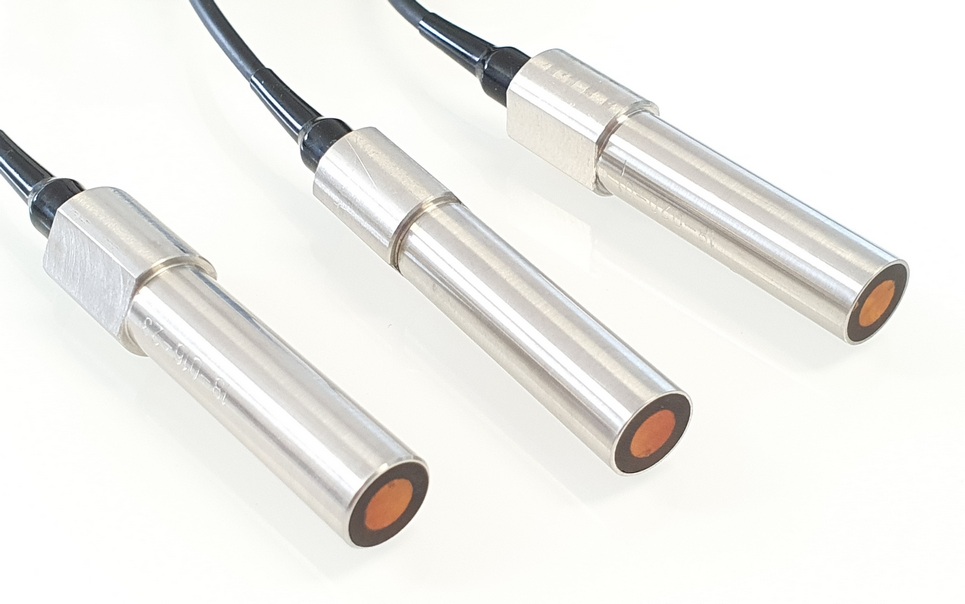
OPTEL ultrasonic transducer and probe
Standard + customconfigurations
2D / 2.5D / 3Dphased array probes
NDT + researchapplications
Patentedtransducer know-how

Standard and custom ultrasonic transducers

Ultrasonic transducers convert electrical excitation into acoustic energy and the returning acoustic signal back into an electrical signal. OPTEL offers a broad family of probes and transducers for flaw detection, thickness gauging, material-property measurements, medical diagnostics, power-generation applications, oil and gas, and other ultrasonic measurement tasks.

Hundreds of standard configurations are possible through combinations of transducer type, element diameter, frequency, connector style and cable arrangement. When a standard probe is not suitable, OPTEL can develop a custom or application-specific transducer for the measurement task.

Need a transducer designed for your measurement task?

OPTEL can adapt the transducer concept to the application instead of forcing the application to fit a catalogue probe. Tell us about the inspected material, measurement geometry, coupling method, operating conditions, electronics and integration constraints. We can start with a feasibility study and define a suitable transducer concept together with the rest of the ultrasonic system.

Discuss a custom transducer
Portfolio

Types of ultrasonic transducers and probes

Arrays and beam-control probes

  • Phased Array Probes (2D, 2.5D, 3D)
  • Transducer Arrays
  • Angle Beam Transducers
  • Normal Incidence Shear Wave Transducers

Coupling and probe geometry

  • Immersion transducers
  • Contact Transducers
  • Delay line transducers
  • Dual Element Transducers
  • Dry-coupled transducers
  • Roller probes
  • Wedges

Special operating conditions

Materials and custom designs

Selection guide

How to choose an ultrasonic transducer

The right probe follows from the material, the geometry and the defect or quantity you need to measure. These are the parameters we look at first:

Frequency

Higher frequency gives better resolution and detection of small reflectors; lower frequency penetrates further in attenuating materials such as plastics, composites, cast iron or concrete.

Element size and focus

A larger element gives a longer near field and a narrower beam; focused probes concentrate energy in a defined zone for small defects, thin layers or immersion C-scans.

Bandwidth and damping

Highly damped broadband probes produce short pulses for thickness gauging of thin walls and near-surface resolution; narrowband probes give more sensitivity at one frequency.

Coupling method

Contact, delay-line, immersion, water-gap, dry-coupled, roller or air-coupled probes – chosen by surface condition, temperature, speed of the line and access to the part.

Wave mode and angle

Longitudinal or shear waves, normal incidence or angle beam (including LCR and SH waves) – depending on where the defect lies and how it is oriented.

Matching to the electronics

Impedance, cable length and pulser voltage decide the usable signal. OPTEL designs the probe together with the opBox, opCard or opMux electronics that drive it.

Applications

Ultrasonic transducers in OPTEL projects

Examples of probes designed or selected by OPTEL for real measurement tasks:

Patents and technical background

OPTEL holds several patents related to ultrasonic transducer construction, ultrasound-field scanning and generation of spherical ultrasonic waves:

  • DE-50009032-D1 — Pulse ultrasonic transducer with an elementary block of piezoelectric material. 2005
  • CA-2366956-A1 — Impulse sound transducer with an elementary block made of piezoelectric material. 2000
  • DE-59504696-D1 — Method and device for scanning an ultrasonic field. 1999
  • EP-0756740-B1 — Process and device for tracing an ultrasound field. 1998
  • US-5828627-A — Method of and apparatus for producing spherical waves in the ultrasonic range. 1998
  • WO-9716260-A1 — Piezoelectric ultrasonic transducer. 1997
  • DE-19644676-A1 — Sound transducer. 1997

Build a complete ultrasonic measurement chain

Frequently asked questions

What types of ultrasonic transducers does OPTEL offer?

OPTEL’s portfolio includes phased array probes, immersion, contact, delay-line, dual-element, angle-beam, high-temperature, high-pressure, composite, air-coupled, broadband, dry-coupled, PVDF, roller, high-frequency and application-specific transducers, as well as wedges and high-power transducers with sonotrodes.

Can OPTEL develop a custom ultrasonic transducer?

Yes. The range includes customized, special-design and application-specific transducers. OPTEL can evaluate a measurement task and prepare a transducer concept for the required application.

Does OPTEL offer phased array probes?

Yes. The portfolio includes 2D, 2.5D and 3D phased array probes as well as transducer arrays.

Are immersion and contact transducers available?

Yes. Both immersion and contact transducers are available, together with delay-line, dry-coupled, roller and dual-element probe configurations.

Are transducers available for demanding operating conditions?

OPTEL’s portfolio includes high-temperature, high-pressure, protected-face and air-coupled transducers, along with special and application-specific designs.

What applications are OPTEL transducers intended for?

Typical applications include flaw detection, thickness gauging, measurement of material properties, medical diagnostics, power generation, oil and gas, and other ultrasonic measurement tasks.

Does OPTEL have patented transducer technology?

Yes. OPTEL holds patents related to piezoelectric ultrasonic transducers, ultrasound-field scanning and generation of spherical ultrasonic waves.

How do I choose the frequency of an ultrasonic transducer?

Choose higher frequencies (e.g. 10–25 MHz) for thin walls and small defects in fine-grained materials, and lower frequencies (around 0.5–2 MHz) for thick or strongly attenuating materials. OPTEL can test the material and recommend the frequency in a feasibility study.

Can OPTEL measure the acoustic field of a transducer?

Yes. The OPSCAN 4.0 scanner maps the ultrasonic field of a probe with a precisely guided measuring head, which is used for probe characterisation, development and quality control.

OPTEL ultrasonic development

Looking for a standard probe or a custom ultrasonic transducer?

Send us the measurement problem and the mechanical/electrical constraints. We can help select a standard configuration or develop a personalized transducer and integrate it with OPTEL electronics and software.

Start with a feasibility studyContact OPTEL